The recycling industry faces concurrent pressures: increasing tonnage, tightening end-market specifications, EPR legislation mandating higher recovery rates, and ongoing labor challenges. Facilities designed around important design principles consistently achieve superior performance across all metrics.
By Ashley Davis
Traditional presort operations have definitively been proven obsolete by operational data from facilities nationwide. Manual presort stations—once considered an essential protective measure—are recognized as the primary constraint on operational efficiency, worker safety, and throughput.
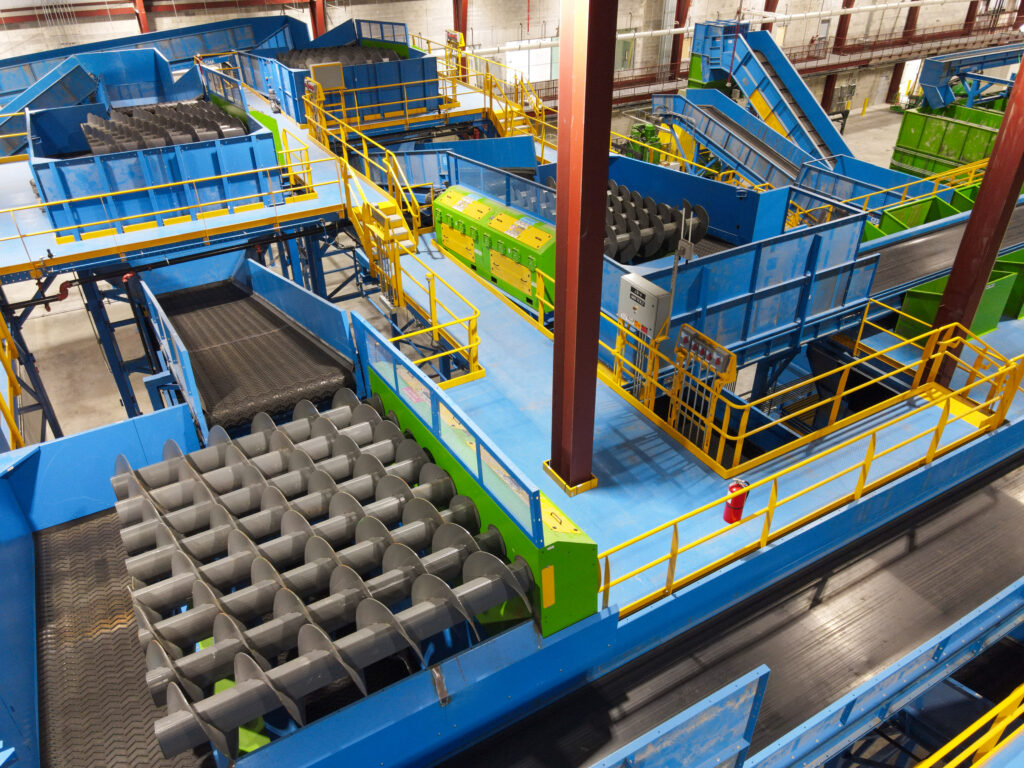
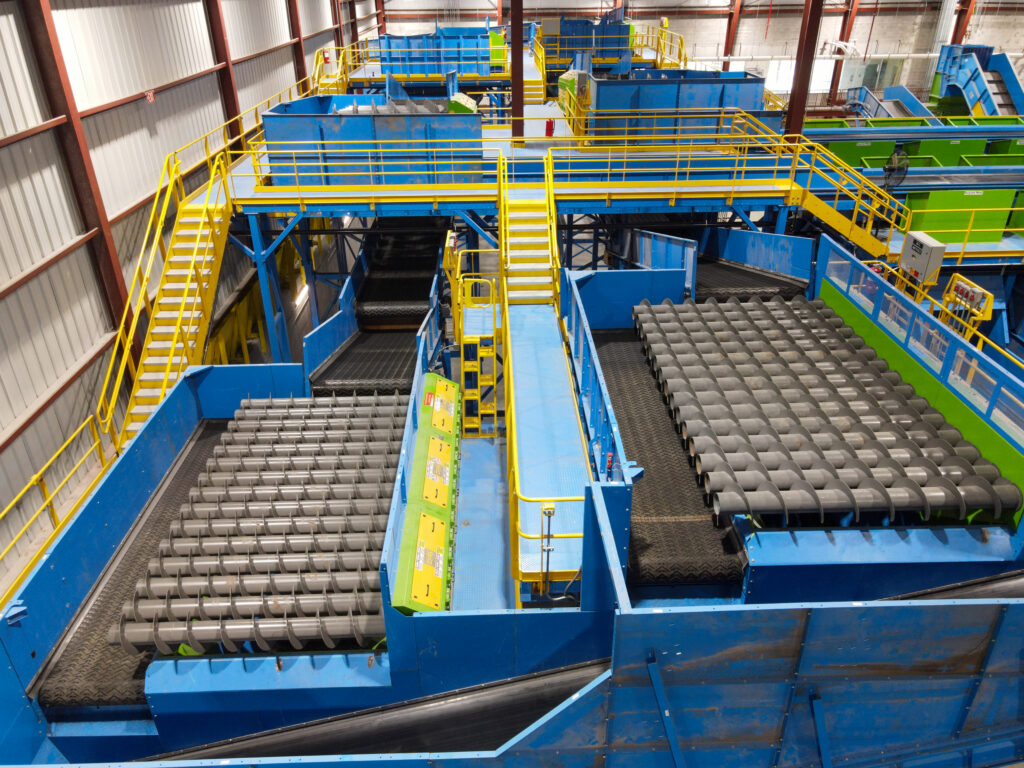
Current MRF construction has standardized on auger screen technology to fractionate inbound material before any manual sorting. Most new facilities commissioned since 2020 predominantly operate without presort stations, and operators are actively evaluating retrofitting existing installations to eliminate this bottleneck.
Three concurrent forces—persistent labor shortages, changes in material stream composition, and the proven performance of equipment capable of processing unsorted inbound material—have driven the industry to adopt presort-free design as standard practice.
The Presort Constraint
Presort stations operate on a defensive premise: manually remove oversized items, non-programmed material, and hazards before they damage downstream equipment. This approach creates high-burden-depth manual sorting at the system’s front end, where material variability is maximum and visual identification is most difficult. Workers at presort face exposure to sharps, contaminated materials, batteries, and other hazards embedded within large burden depths of quickly moving material.
The operational and safety costs are documented across hundreds of installations. Facilities running residential single stream typically allocate 40 to 60 percent of manual sorting labor to presort stations. High-residue markets can require even greater presort staffing. This labor-intensive operation represents both the highest safety risk and the lowest recovery value in the facility.
Material Stream Evolution
Inbound stream characteristics have fundamentally shifted over the past decade. The “lightweighting” trend—manufacturers using less material per package—has reduced inbound density. Simultaneously, the growth of e-commerce has increased corrugated volumes while decreasing newsprint. Small-format OCC, flexible packaging, and film contamination have all increased substantially.
These changes compound presort challenges. Lower-density material creates greater burden depth for the same tonnage. Increased small OCC and flexible packaging reduces material rigidity, making visual discrimination more difficult. The same 50 TPH system that performed adequately in 2010 would now require additional presort labor to maintain throughput. Hence, throughout has dropped for some older facilities.
The Automation Impediment
Presort stations have historically been considered impossible to automate. The combination of large item dimensions, extreme material variability, and deep burden depth places presort outside the effective operating envelope of optical sorting systems, robotic pickers, and mechanical separation equipment. Consequently, presort creates a mandatory manual bottleneck at the system’s entry point—the exact location that determines the system’s maximum throughput.
Any serious automation strategy must eliminate, rather than attempt to automate, the presort function. This requires equipment capable of accepting the full-spectrum inbound stream without preprocessing.
Proven Alternative: Non-Wrapping Primary Screening
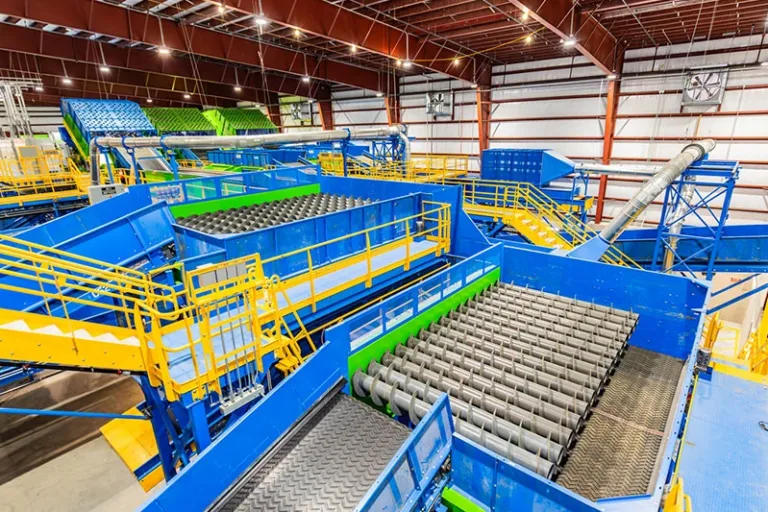
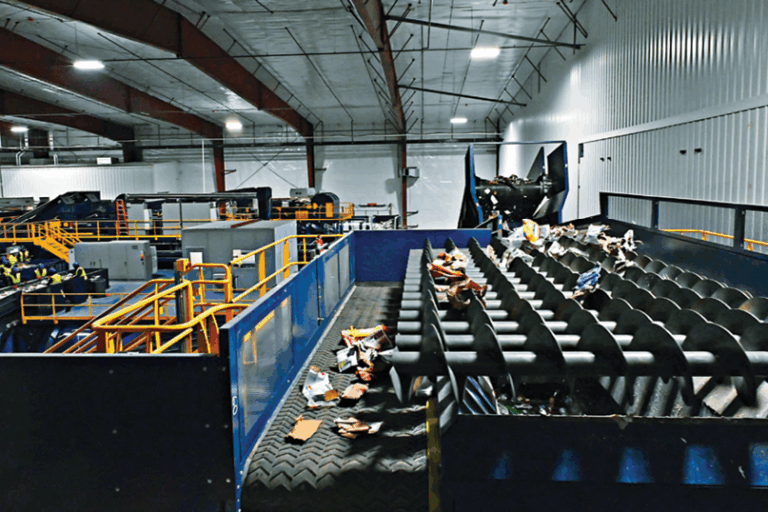
The industry has moved decisively toward non-wrapping, non-jamming primary screening equipment as standard practice for modern MRF design. Auger Screens using cantilevered, non-round shaft configurations provide the dual characteristics that presort elimination requires: continuous, non-wrapping screw conveyance combined with disc screen agitation and amplitude.
Multiple operational installations have validated this approach. Facilities now routinely operate without presort stations, performing all non-program material removal at quality control positions where the burden depth is much lower. Many hazards, such as sharps, are screened out and bypass personnel completely. This represents complete elimination of front-end manual handling—not a reduction, but elimination.
- The technical specifications are well-established:
- Primary auger screens reduce presort burden depth by 60+ percent for residential single streams.
- Commercial material sees 25+ percent volume reduction at post-sort stations.
- Cantilevered design allows wrapping material to screw off the endrather than accumulate and cause maintenance issues.
- Non-round auger geometry creates agitation sufficient to produce a finished OCC product without secondary screening.
The engineering challenge involved bidirectional clocking of non-round screw flights—a geometry that required novel solutions to manufacturing and assembly constraints. The 2022 NWRA Recycling Equipment Innovator of the Year Award recognized the revolutionary effect of this patented technology. Since that recognition, adoption has accelerated industry-wide as operators recognize that presort-dependent designs cannot meet current operational, safety, and economic requirements.
Safety Implications
Best practice design eliminates presort positions entirely, removing workers from the facility’s highest-hazard location. By fractionating small material before any manual sortation, modern primary screens remove sharps, needles, broken glass, and contamination from the material stream workers contact.
Reducing burden depth at manual quality control stations improves visual identification and increases system-wide efficiency. Workers interact with material after it has been fractionated into manageable streams rather than confronting the full brunt of unsorted inbound material. Facility uptime increases as pedal and e-stop pushes decrease.
Process Flow Design Best Practices
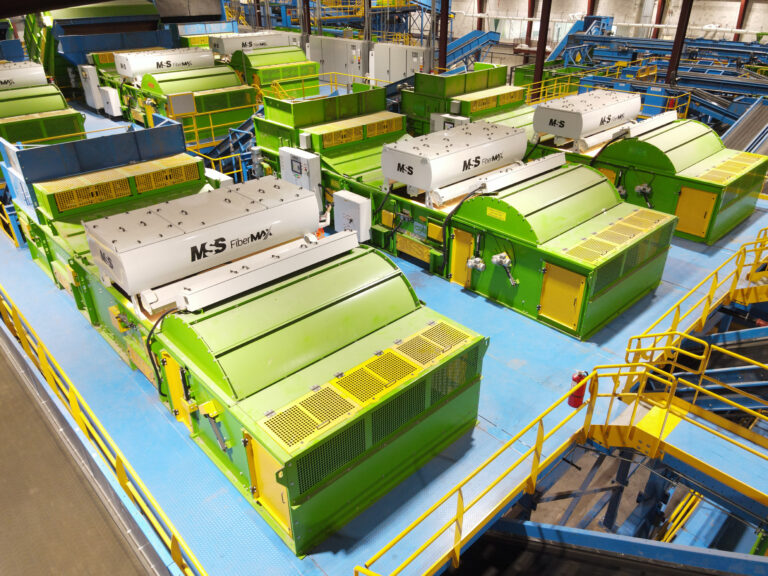
Modern MRF design starts from validated first principles: fractionate material immediately upon infeed using non-wrapping primary screens, liberate commodities through mechanical agitation, then separate by grade using the appropriate combination of mechanical and optical systems. This is no longer theoretical—it is demonstrated best practice at facilities processing millions of tons annually.
System throughput becomes decoupled from the availability of manual labor. When primary sizing requires no preprocessing, maximum sustained throughput is determined by mechanical equipment capacity—a stable, predictable parameter that facilities can design around with confidence. Dozens of installations now demonstrate throughput capabilities that would be impossible with presort-dependent designs.
The Path Forward
The recycling industry faces concurrent pressures: increasing tonnage, tightening end-market specifications, EPR legislation mandating higher recovery rates, and ongoing labor challenges. Modern MRF design addresses these pressures simultaneously through proven best practices. Best practice facilities employ:
- Non-wrapping primary screening for immediate material fractionation without preprocessing
- Mechanical systems at the front end, where they excel—high volumes, variable material
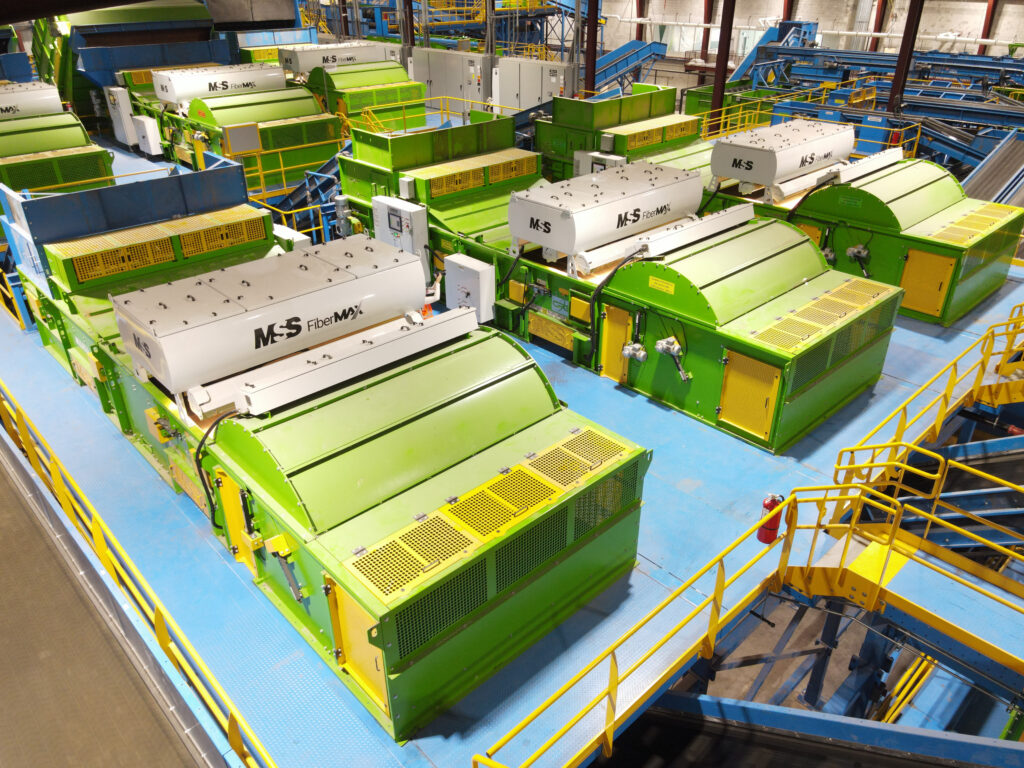
- Fractionation and liberation of material to adequately feed NIR optical sorters, and commodities can be selectively sorted most efficiently at high volumes
- The use of both AI and NIR technology to sort and QC commodities in place of manual sorters
Facilities planned around these design principles consistently achieve superior performance across all metrics: higher throughput, lower operating costs, improved safety, and better commodity recovery. These are not projections but measured results from operating facilities.
The question for owners and operators planning new facilities or major retrofits is whether to design around obsolete assumptions or implement proven best practices. Some equipment manufacturers now offer standardized solutions based on dozens of successful installations. MRF designers now specify presort-free systems as the default.
The industry has established that presort elimination is not only technically feasible but operationally superior. Best practice is defined by what the leading facilities demonstrate daily: presort-free operation using non-wrapping primary screening is the foundation of competitive MRF design. | WA
Ashley Davis, MBA, is the Director of Sales and Marketing for CP Group. She is third generation with the company. She manages the sales and marketing teams and oversees all sales and brand objectives. Her focus is on sales layout developments and delivering high quality customer experience through all brand touchpoints. For nearly five decades, CPG has been a leader in the waste and recycling industry, specializing in designing, manufacturing, installing, and servicing innovative material recovery facilities and sorting machinery. Ashley can be reached at www.linkedin.com/in/ashleydavispawlak. For more information, visit www.cpgrp.com.
This article was originally published on March 07, 2026, in Waste Advantage