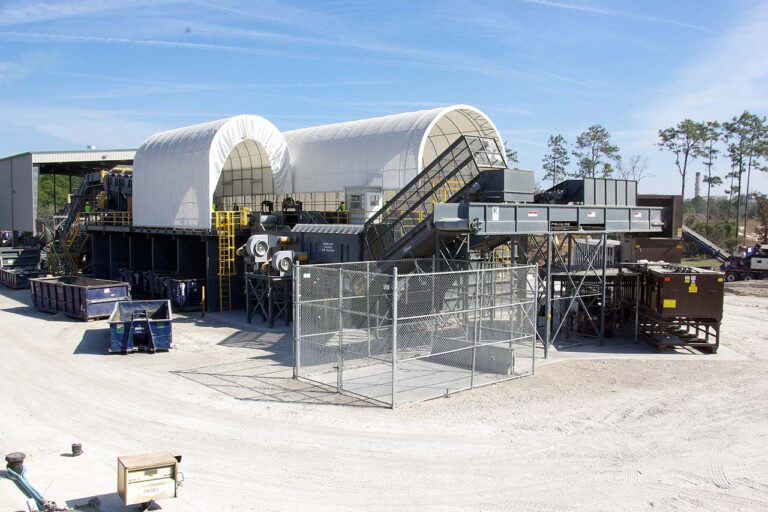
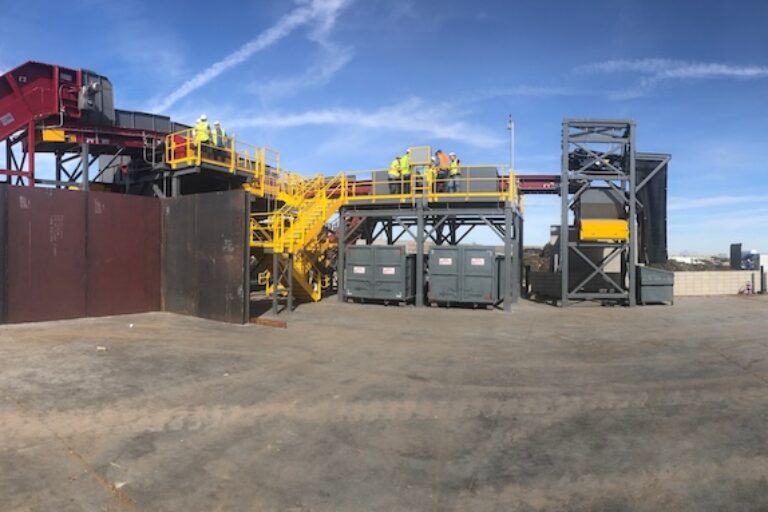
Sorting Systems
Designed for Operators, by Operators.
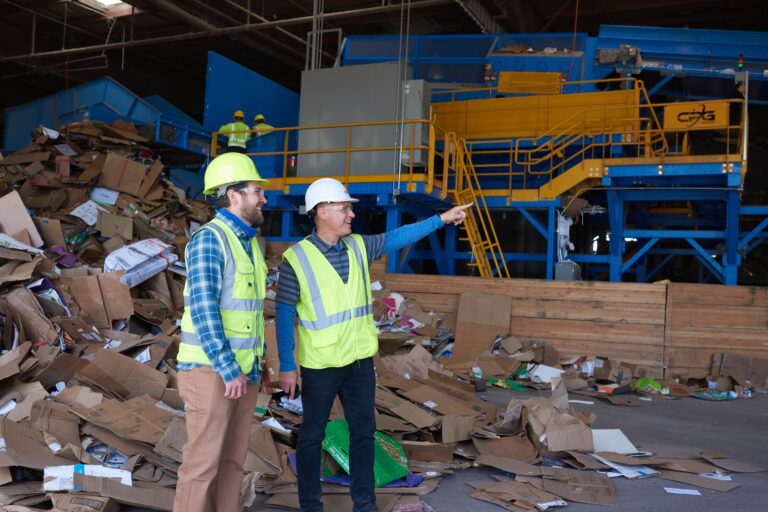
CP Group’s engineering and leadership team brings decades of hands-on MRF operations experience — and that background drives every system we design.

CP Group’s engineering and leadership team brings decades of hands-on MRF operations experience — and that background drives every system we design.
Operating a MRF is very demanding and can be challenging. We will work hand in hand with you to design a MRF that will meet your expectations. Communication between owner/operator, MRF integrator and third-party players is vital to the project’s success.
The CP Group team has spent decades inside material recovery facilities — not just designing them. That operational background shapes our approach to every project: how we fractionate material to reduce manual sort dependency, how we select and position equipment to minimize maintenance burden, and how we define throughput targets that hold up under real operating conditions — not just commissioning day performance.
Less Manual Sorting. Lower OpEx. Cleaner Commodities. These aren’t marketing claims. They’re the outcomes our team has measured firsthand and engineered into every system we build.
We can handle the nuances of an evolving material stream with our innovative designs and adaptable equipment. We focus on implementing automation and technology to help you meet your specific goals and keep operating costs low. Let’s work together.
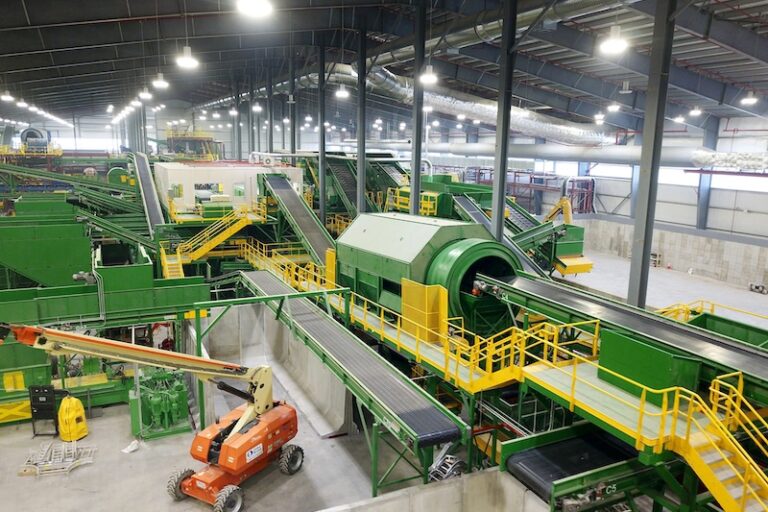
Our mission is to maximize the value of the material stream by identifying crucial stages in the recovery process and using precise equipment at each point.
This involves three major steps: fractionating for size and density differentiation, liberating material for streamlined downstream processing, and separating commodities through highly precise selective sorting.
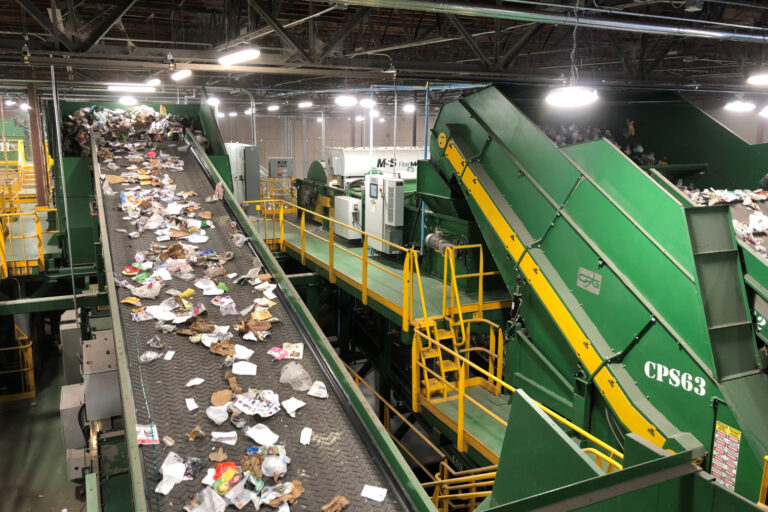
Our solution mechanically splits inbound mixed material into similarly sized streams, creating parallel flows and enhancing downstream machine efficiencies. The CP Auger Screen™ diverts 60% or more of undersized fraction away from traditional presort, eliminating the need for 50% or more manual sorters. This solution increases worker safety and enhances productivity.
The next step in MRF design mechanically prepares material for downstream sorting, liberating 2D material from 3D material with high-capacity screens. This process increases purity standards as commodities continue to the next phase. The CPScreen™ and AWScreen™ are high capacity low maintenance screens crucial for this step.
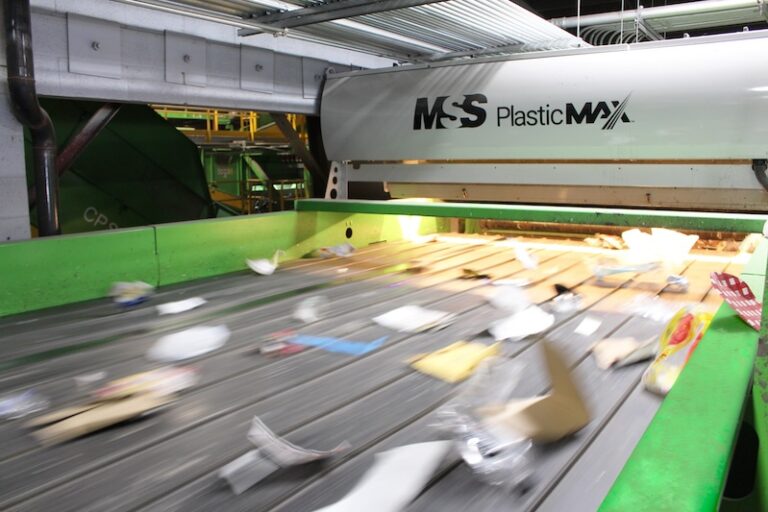
Optical sorters and AI identify and extract commodities, providing high volume and purity paired with low-cost recovery. MSS optical sorters run at the fastest belt speeds and widest belts, offering flexibility for future needs. Vivid AI™ offers advanced sorting with deep learning capabilities to further automate MRFs.
Shakopee, MN
“We don’t just design systems for operators — we design them as operators. The Dem-Con partnership, now a decade strong, reflects what that commitment looks like in practice.”
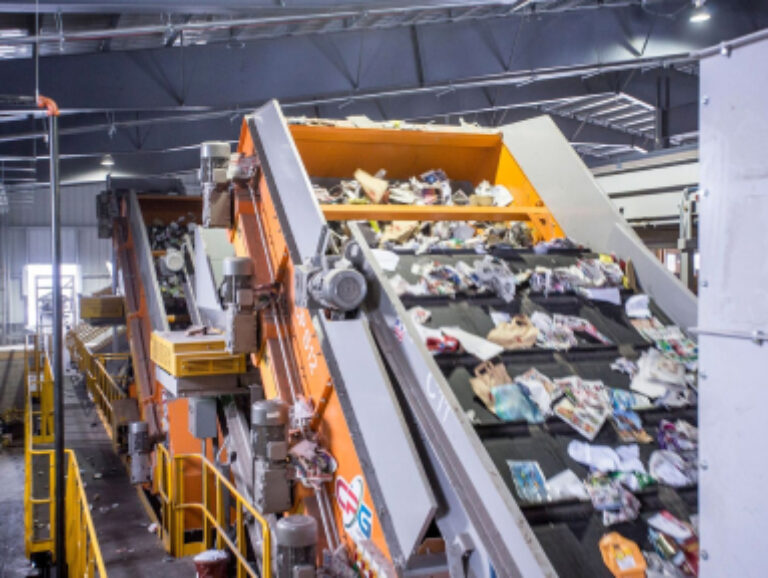
Dem-Con, Shakopee, Minnesota, installed their CP system in 2014 and was awarded the prestigious SWANA Gold Excellence Award in Recycling Systems in 2015.
Since then, Dem-Con has conducted multiple upgrades with CP Group. The first, in 2017, involved adding an MSS CIRRUS® optical sorter to recover small cardboard and other fiber.
Next, in 2018, CP Group installed two MSS FiberMax™ units in parallel. “That brought the contamination in our fiber down from 2% to 0.5%,” Dem-Con President Bill Keegan says.
In 2019 the sensor on the original optical sorter was upgraded to a CIRRUS® PlasticMax™ sensor to positively sort PET. Keegan says this retrofit improved recovery by 21% while also reducing headcount by two. “We are meeting end market specifications of less than 1% contamination.”
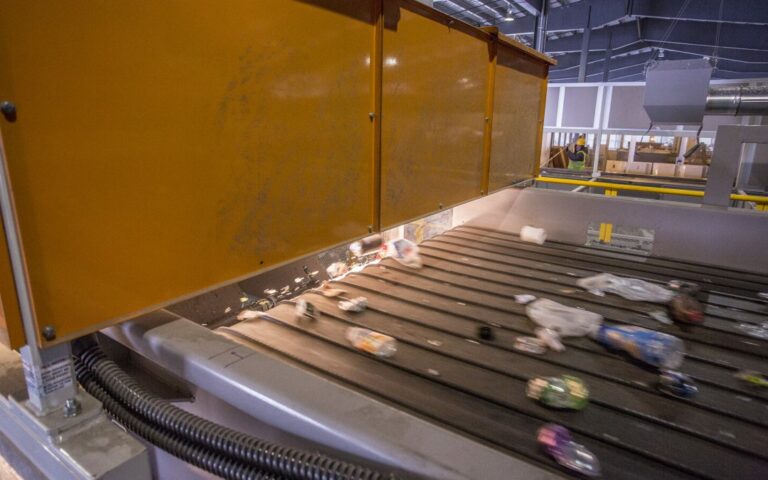
The 2018 and 2019 upgrades combined allowed Dem-Con to reduce headcount by 36% and increase its processing capacity from 20 tph to 25 tph.
Currently, CPG is providing two more system upgrades for Dem-Con, set to be complete in 2024.